Mechanical construction: Often based on industrial displays or high-end commercial panels, with a reinforced frame, but not as secure as broadcast models.
Illumination (backlight, light source): High-quality backlighting that ensures color fidelity, but continuous operation is rarely required, more like 12/5.
Circuits and electronics: High color depth and accurate signal handling, but without broadcast-specific synchronization and signal routing options.
HDR support and image quality: Almost all high-end studio monitors have full HDR support, often with a wider brightness range (1000–4000 cd/m²) and a larger color gamut coverage (DCI-P3 ≥ 98%, partial coverage of Rec.2020). These monitors are reference devices, so they reproduce HDR as accurately as possible.
Video input connections: HDMI, DisplayPort, sometimes Thunderbolt, or DVI
Key tests and calibration: Color temperature, gamma, white balance, brightness unevenness, etc.
75" Ultra Narrow Edge 4K Splicing Monitor for Video Wall
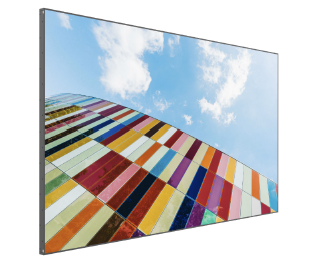
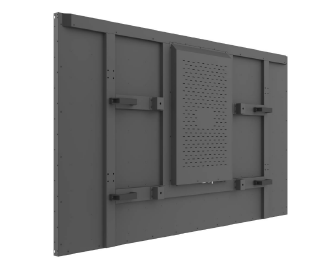
Integrated multi-channel video signal source
Built-in firmware intelligent upgrade system。
Narrow frame all metal outer frame desig
It has 3D noise reduction, 3D filtering and 3D interlacing removal
It is energy-saving, environmentally friendly and radiation-free, supports 7*24 hours of non-stop operation, and can adapt to various working environments requiring long time on.
Uniform brightness, stable image, no flicker, no distortion
Suitable for: commercial institutions, large shopping malls, security monitoring, chain franchise stores, hypermarkets, star hotels, restaurants, travel agencies, government enterprises and so on.
| Produc Specification Details | Product Series Narrow Bezel 4K Video Wall Monitor |
| Screen Size | 75 inches |
| Appearance color | Black |
| Border thickness | 6 mm |