To reduce the energy consumption of LED video walls, several strategies can be applied. First and foremost, the use of common cathode PCB design and MOSFET technology is recommended. Setting optimal brightness levels, implementing intelligent brightness control, reducing refresh rates where possible, ensuring proper voltage regulation, and selecting high-efficiency LED modules with effective cooling solutions all contribute to minimizing power usage.
System and Hardware Solutions
Common Cathode PCB Design:
This approach is more efficient than the traditional “common anode” solution, especially for low-voltage LEDs. It eliminates unnecessary current flow when no data is being transmitted, thereby reducing power losses.


High-Efficiency Components:
Employing LED chips with higher luminous efficacy ensures more electrical energy is converted into light rather than heat, improving overall energy efficiency.
Optimal Voltage Regulation:
Proper voltage regulation prevents energy losses and allows LEDs to operate at their most efficient voltage level.
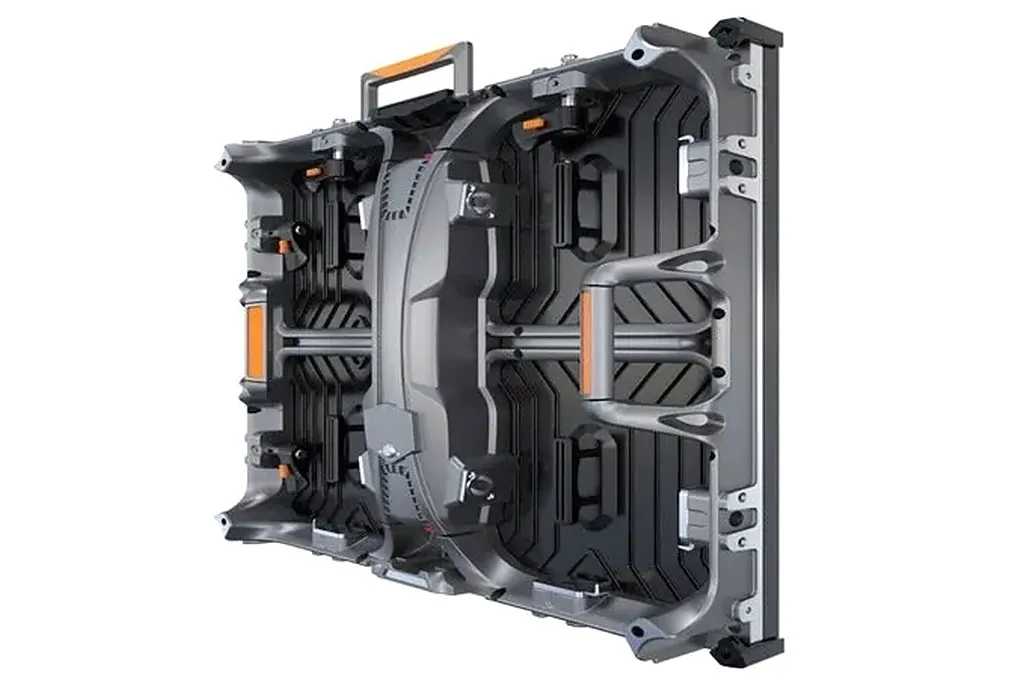
Thermal Management:
A well-designed cooling system significantly reduces energy consumption and prolongs the lifespan of the LED display. Solutions include sufficient heat dissipation surfaces and airflow designs tested in wind tunnels, preferably integrated into fanless modules.
Operational and Software Solutions
Intelligent Brightness Control & Content-Aware Adjustment:
Smart brightness management technologies automatically adapt screen brightness to the displayed content, reducing energy use during darker scenes.
Lower Brightness & Color Temperature:
Overall screen brightness should be reduced for indoor or nighttime applications. Where possible, using lower color temperatures is beneficial, as higher color temperatures typically require more energy.
Energy-Saving Modes:
Built-in eco modes can be enabled to automatically dim backlight levels or reduce power consumption when the display is idle.
Reduced Refresh Rate:
Lowering the screen’s refresh rate, when acceptable for the application, helps decrease power demand since higher refresh rates consume more energy.
Motion and Ambient Light Sensors, Timers:
Integrated sensors can adjust LED brightness according to ambient light conditions or trigger automatic on/off switching based on motion detection. Timers can also be used to schedule operational periods for further energy savings.
Source: AI + Tomo (Photo: Haikoto)